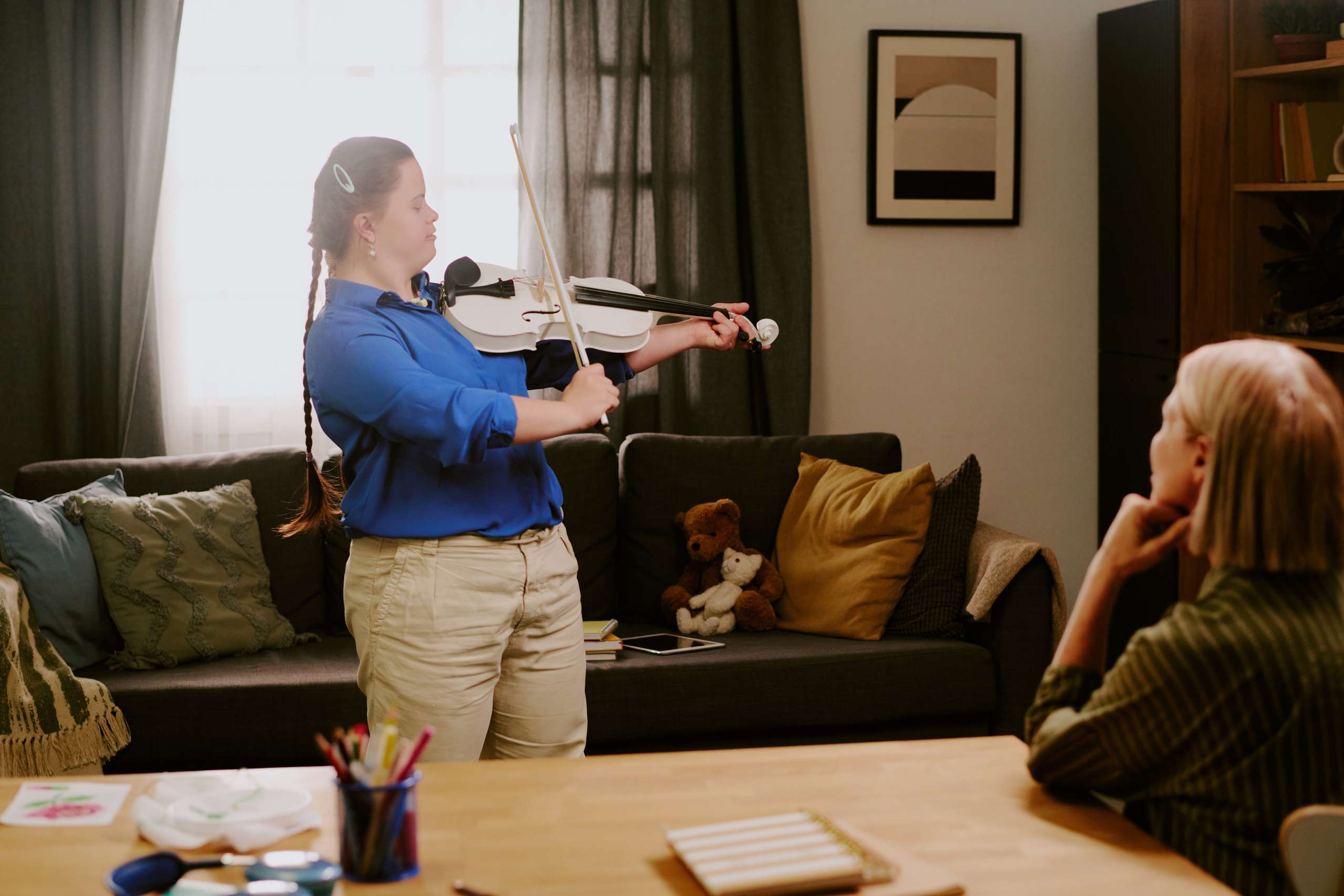
New players often find that even with a comfortable bow, the left hand still can’t get to the right spot on time. Fingers flail above the fingerboard, notes are slow, and easy passages feel clumsy. This is almost always due to an attempt to control the fingers, as opposed to the hand, as a whole. Simply rest your thumb against the back of the neck, and allow your fingers to curl over the strings as if you are holding a small ball. If you keep your hand shape consistent, your fingers will require much less work to drop.
It’s not a matter of using more force but of more targeted destination. Do this: Using one finger, tap it against a string (while the bow is held motionless). There should be a clear tone, and the finger should not have to squeeze or press. If the tone is dark or “pinched”, that finger is using too much pressure. Release and try again, this time using less pressure, until that string rings out clear. This will teach the finger that it is possible to be clear without using too much pressure, and you will begin to move more quickly immediately.
It is a common error to raise the fingers high off the fingerboard between the notes. It may feel like a way of preparation for the next note, but it really only adds more distance and therefore increases the time it takes to place the finger on the next note. Look at the finger tips and attempt to keep them close to the fingerboard. The action should more resemble playing a piano (light tapping on the keys) than dropping your finger from on high. If the hand clenches, stop and shake it loosely and begin again at a slower tempo.
For a quick practice session, play the following pattern for a few minutes: 1st finger down, raise, 2nd finger down, raise all on the same string. Then go backwards. Keep the bow going so the tone isn’t interrupted when you change fingers. This will connect the timing of the two hands and will tell you if your left hand is really prepared before the bow reaches it. Increase the tempo as long as each note responds without delay.
If you get stuck, simplify rather than bearing down. Play without the bow, focusing on the little thudding sound each finger makes when it hits. Then try again with the bow, but at a much slower tempo. Control comes from simplicity and minimal motion, not strength. As your hand gets used to staying close, relaxed, and organized, you will be amazed at how easily the notes seem to drop under your fingers, and even fairly simple passages will feel smooth instead of strained.